Choosing printable activities for siblings of different ages
A shared activity time does not require identical tasks. Give each child a comfortable challenge and bring them together to explain, compare or show what they made.
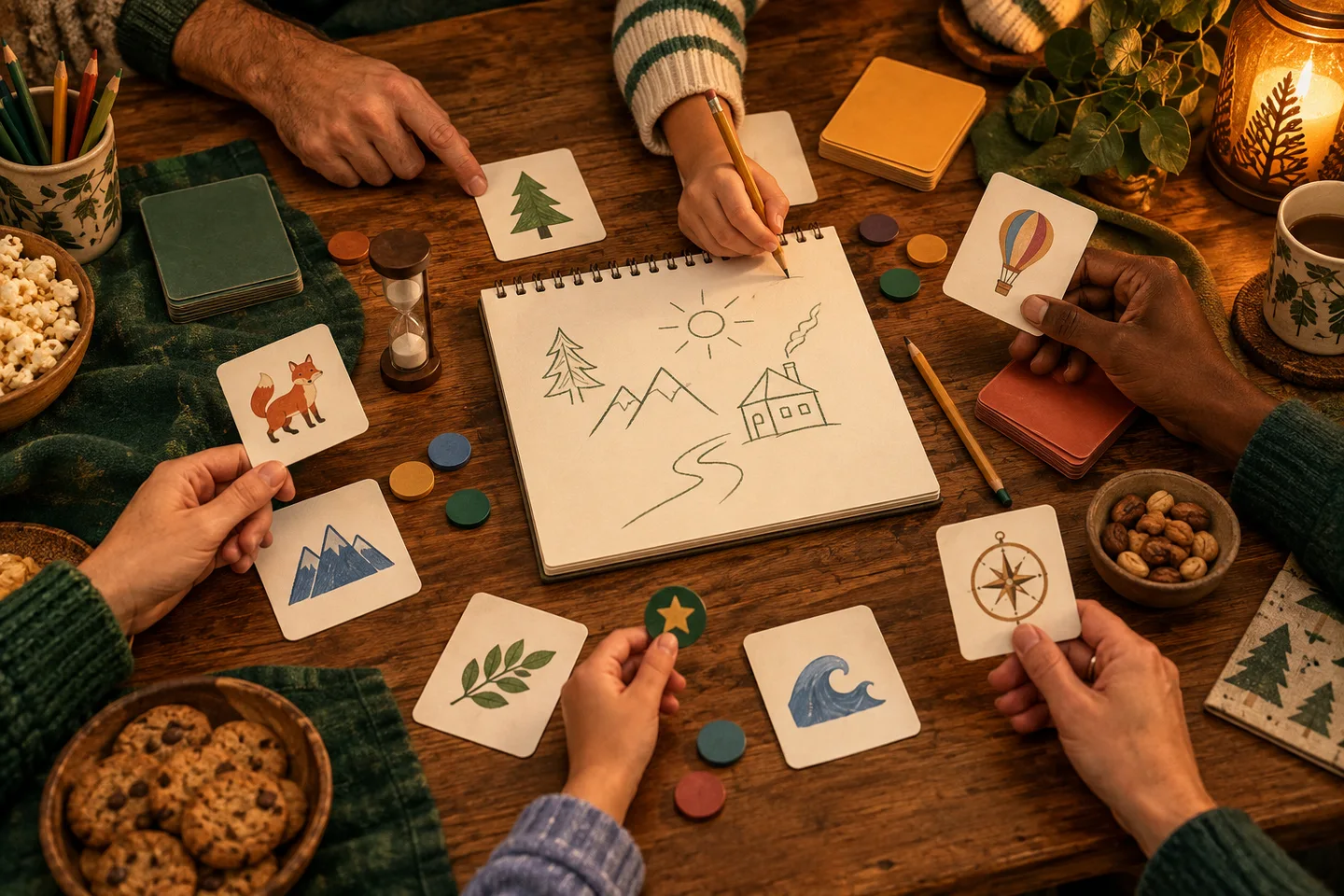
Use a shared theme with separate tasks
Choose a subject both children like, then select different pages around it. A younger child might match or count while an older child solves a word or reasoning task. Check the contents of each pack rather than assuming two age editions have matching themes or page numbers.
Give the older child a role, not all the work
Invite an older sibling to read a short instruction, hold a page steady or ask what the younger child notices. Avoid making them complete the answer. Swap roles during a practical or drawing task where the younger child can lead.
Make space for different finishing times
Put a drawing page or an open-ended making task nearby for whoever finishes first. Agree that showing an answer is optional until everyone is ready. If one child is tired, let them stop without turning the activity into a race.
Choose between separate pages and a shared game
Individual activity packs work when children want different challenges. A hosted family game is another option when you want everyone around the same table. Check the youngest recommended age, reading support and type of rounds. For a connected escape story, an adult may need to read clues aloud and manage turns.
Finish by sharing one thing
Ask each child to show one idea, explain one choice or choose a favourite page. This gives a shared ending even when the activities were different. Save unused pages for another day rather than treating a large collection as a checklist to finish.
Put the plan into practice
Prepared by PlaydayVault. Check each product’s current contents, samples and licence before choosing. Ask about a pack